
Fifty-Two Weeks
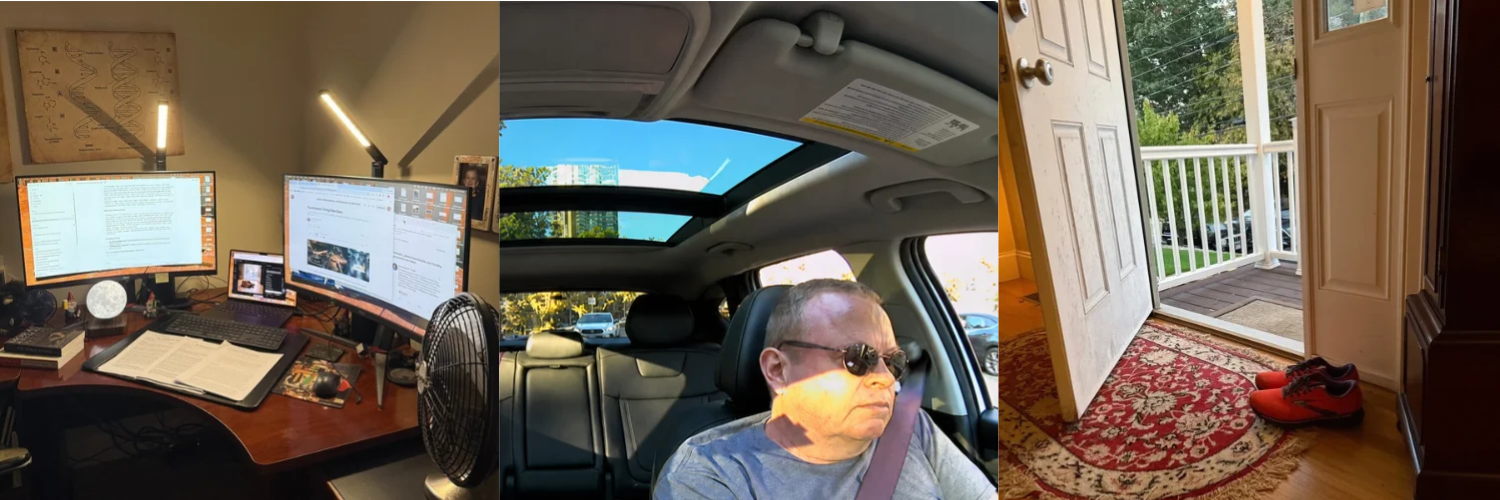
Why I am moving to an essay every two weeks, and what a lost walking habit taught me about routines
When I started this series, I made myself a promise: an essay every week. I have kept it every week but one. That one, I wrote and thought I had posted from a few days at the beach, but when I got home, I realized I’d missed the last step. This is the fifty-third essay. The first fifty-two went out in just under eleven months.
From here, I am going to publish every two weeks. The next essay will arrive on October 27, and every second Tuesday after that.
I have plenty to say, and I am not stopping. But I wrote one recent essay the day before it was due, and the next on the day itself. That told me something I had been avoiding.
When I began, weekly was a decision. I made it on purpose, for reasons I could have explained to you. At some point it stopped being a decision and became simply what I do each week. I hadn’t asked whether it still fitted my life since the day I made it.
This essay is me asking. It turns out the weekly essay isn’t the only routine I stopped examining, and it isn’t the one that cost me most.
Why Weekly
When I began, writing was the whole job. I had spent twenty-five years in technology consulting, and I had already written several long working papers on how I think artificial intelligence should be built and used. The material was there. What I lacked was a track record as a writer.
So I set a rule: one essay a week, each one good enough that I was happy to stand behind it. My thinking was simple. A new writer has no record, and the only way to build one is to turn up on time, again and again, until people can see what you are about. A weekly essay was how I would lay a base.
I still think that was the right call for the conditions. I had the time, and I had plenty of material. The discipline turned a stack of papers into fifty-two essays that someone can read from the start. It also pushed me, week by week, to write more plainly for readers who do not work in technology. I am still working at that.
But the rule was made for those conditions. The conditions changed, and I left the rule as it was.
What Went, and in What Order
Start with the walking.
In 2013, my doctor told me I was pre-diabetic. I started measuring my blood sugar, and I started walking every day. Within a year, I had lost 60 lbs. By then, the walking was no longer a treatment. It was my time: anywhere from 4 to 14 miles a day, in any weather, with music or a book in my ears. For ten years I was up at four or half past to fit it in before work. By my count I have walked once round the Earth and started a second lap.
I kept it up for most of twelve years, through the year I was out of work and looking, and into the months after, when I began my research and writing. Then, in the autumn of 2025, I slowed down. Some months later I had more or less stopped. The slowing began before I had published an essay here, and well before the driving.
No single thing ended it, and time wasn’t the reason. I began to question a lot I had taken for granted, and the walking got caught up in that. I had lost sight of why I started. The benefits had been there so long that I doubted walking caused them. And, if I am honest, part of it became about how I looked and what other people thought of me. So I let it go, and I am worse off for it. The books went too, because I listened while I walked. I am still 30 lbs lighter than at my worst, but I am not where I was.
Five months ago, I started driving for Uber, 20 to 25 hours a week. I had promised my wife that I would bring in income and keep writing, and this was how. For a while, the essays didn’t suffer, because I had plenty stored up. But something had to give. A month or two ago it was the time I spent reading and replying to other writers here. In the last few weeks it has been the essay itself, squeezed into the final day.
The plain account of that is not very interesting. I took on more than twenty hours of driving a week and expected everything else to fit around it. It did not. What interests me is that it took me about five months to ask whether the weekly essay still made sense.
Two Standing Answers
In The Fasten Your Seatbelts Century — Again, I wrote about living with a seatbelt sign that never goes off. You can ignore it, or you can stay white-knuckled. Either way, you have stopped asking whether this particular warning means anything. I called those settings, not decisions. A decision looks at the conditions. A setting was once a decision, and now runs without anyone checking it.
I have been running two of them.
The walking was a setting that was good for me. It began as a decision, driven by a doctor’s warning and a blood sugar reading. Over the years, the reason faded, and only the habit remained. When I finally questioned it, I had lost sight of what it was for, so I had nothing to defend it with. I dropped a good routine because I had lost its reason.
The weekly essay was a setting that no longer fit. It also began as a decision, for the reasons I gave above. Then the driving filled my weeks, and I did not ask whether a rule made for open weeks still suited full ones. I kept a routine because I never went back to its reason.
Those look like opposite mistakes, and the causes were different. The walking faded through apathy. The weekly essay stopped fitting because my time changed. But I think the mistake underneath is the same one. In both cases, I had the routine and had lost track of why.
I do not think routines are the problem. Twelve years of walking happened because I did not have to decide each morning. The trouble starts when the reason gets obscured by the mist of life, because then I cannot tell a routine worth keeping from one that needs changing.
Is this adjusting, or giving up? Fifty-two essays show that I can keep going. They do not show that slowing down is right. What tells me this is an adjustment is that the conditions changed. The weeks I made the rule for are not the weeks I have now.
What Changes for You
An essay will arrive every second Tuesday, starting October 27.
In the weeks between, I will go back to reading and replying to other writers here. I stopped a month or two ago, when the driving squeezed it out. Many of the ideas in these essays began as a comment on someone else’s work, or as an objection someone raised to mine. I do not want to write without listening.
The walking is a separate matter. It is not for the weeks between. It is for every week. I want to be careful here. A lighter schedule will not put me back on the road, because time was never the reason I stopped. The change gives me room. The rest is up to me. I am saying so here, in front of you, because a promise made in public is harder to let slide quietly. I know I am saying that in the same essay in which I change an earlier public promise. The difference, I would claim, is that I am changing that one in the open and telling you why. With the walking come the books, and the books feed the writing.
I cannot promise the essays will be better for being fewer. I do intend that I will not write them on the day they are due.
What I Do Not Know
I do not know that every two weeks is right either. It is my best reading of the conditions I am in now: the driving, the walking I have started again, and the conversations I want to get back to. Those will change again.
So this time I am writing the reason down. That is partly what this essay is. When I next wonder why I publish every other Tuesday, the answer will be here, dated, and I can check whether it still holds. I mean to do that in the spring, after a dozen essays at the new pace.
Fifty-two essays showed me I can hold to a routine. The walking showed me that holding to one is not the same as remembering what it is for. I would like to manage both.
Thank you for reading the first fifty-two. The next one is on October 27.
Originally published on Substack.