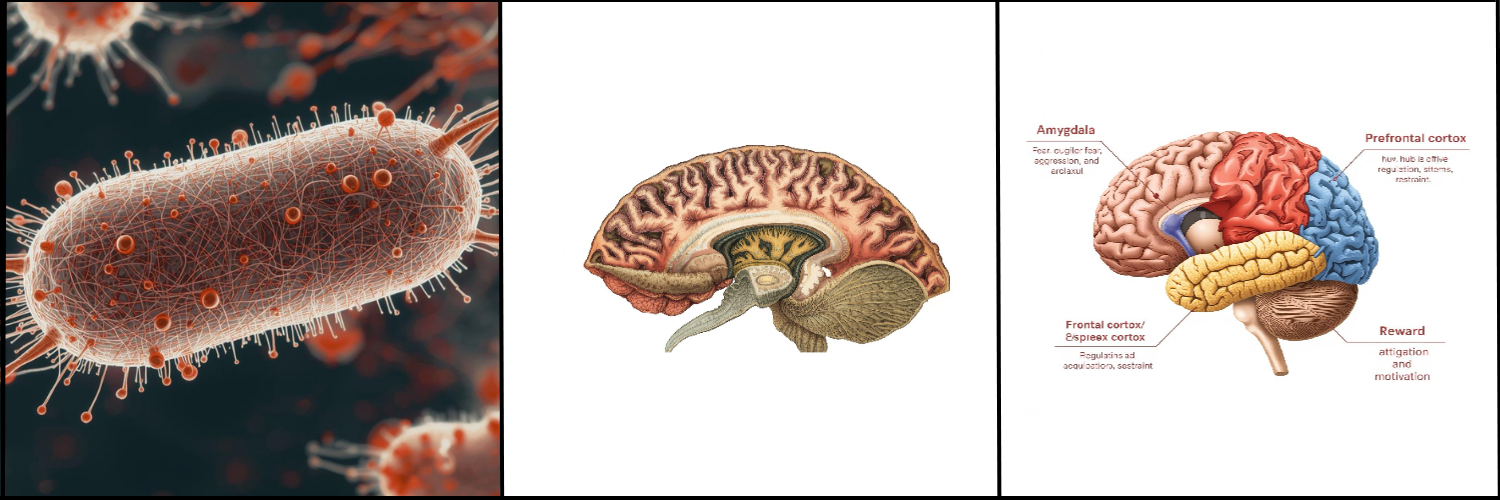
We Feared AI’s Flaw. We Built It First. 05/12/2026 A note I posted recently about due process sparked a broader thought. I’ll come back to it at the end.
Tim Lee Is Right About Hunches. 05/06/2026 In [a recent piece](https://substack.com/home/post/p-196703642), Tim Lee offers one of the cleaner arguments I’ve read for why today’s agent architectures are unlikely to produce “AI scientists” anytime soon. His central observation: the implicit knowledge knowledge workers carry, the hunches, th...
The Architecture of Truth 05/05/2026 The cognitive toolkit is necessary. It is not sufficient. Here is what's missing.
AHI From the Inside 04/28/2026 David Hoze and I had been corresponding since early April about a co-authored essay. Three movements, his philosophical and theological grounding bridging to my structural one, the disagreement between us preserved rather than smoothed over. The tone had been generous on both sides.
Seed Corn and the AHI Imperative 04/21/2026 In the previous two posts, I established that wisdom cannot be accumulated and that AI is structurally precluded from traversing the loop that produces it. This week: what that means for the humans building expertise alongside these systems, and why the decisions being made right now may be the m...
The Engine and the Cap 04/14/2026 Last week, I established that wisdom cannot be accumulated. It must be traversed. This week: what traversal actually requires, and why AI cannot complete it.
The Variable Nobody Measured 04/07/2026 In early 2026, researchers added an important wrinkle to what had been a fairly damning picture of AI’s effect on human reasoning.
The Wave That Bypasses the System 03/31/2026 Water scarcity is not a future threat. It is here now. Remember the Survival Rule of Threes: death is the likely result of three minutes without air, three hours without shelter (in extreme conditions), three days without water, and three weeks without food. Four billion people, more than half th...
A Viking, A Roman, A Greek Cypriot, and an Englishman living in Boston Walk into a Bar in Lisbon 03/24/2026 There is a particular kind of friendship that only makes sense to people who have it. It doesn’t require regular contact, shared geography, or even similar lives. It requires a shared past that was formative enough that no amount of intervening time can entirely dissolve it.
Swarm Intelligence 03/17/2026 I played Doom. Almost obsessively. For nearly two years (1995 to 1997), my colleagues and I would wrap up long days on a construction site in Connecticut and disappear into networked deathmatches for a couple of hours or more (please don’t judge). It was, in the best possible way, a complete wast...
The Last Guardrail 03/12/2026 Two weeks ago, on Friday, February 27th, reports emerged of a confrontation between the U.S. Department of Defense and AI company Anthropic over the use of its Claude model in government systems. Within hours, the dispute escalated into an extraordinary step: federal agencies were directed to cea...
After the Music Stops 03/10/2026 In the first piece in this series, I argued that the technical foundations of the AI scaling thesis are cracking. Turing Award winners and field pioneers are converging on a shared diagnosis: brute-force scaling of large language models won’t yield general intelligence, and something architectura...
When the Music Stops 03/03/2026 Michael Burry, the investor made famous by *The Big Short* for calling the 2008 housing crash, is shorting Nvidia and Palantir. He might be early. He might be wrong. But the fact that serious money is now betting against the AI boom tells us something worth examining.
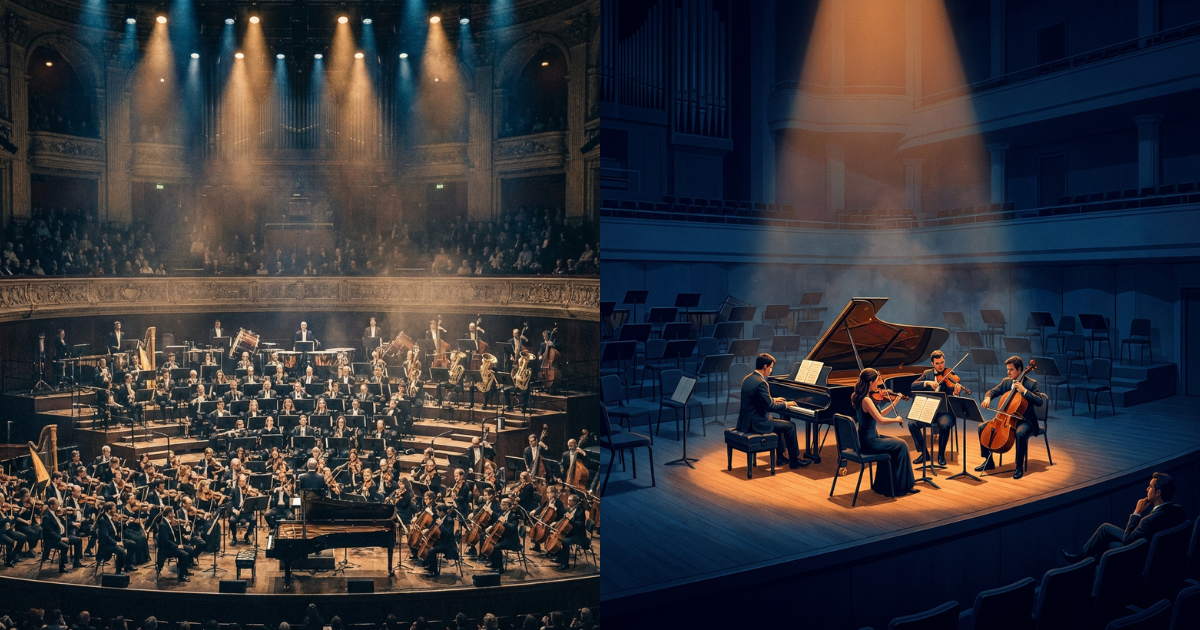
More Instruments, Same Tune 02/24/2026 The dominant AI narrative is seductively simple: scale is all you need. More data, more compute, more parameters, and intelligence emerges. It’s the story that’s justified hundreds of billions in investment, reshuffled the power structure of Silicon Valley, and convinced a generation of executive...

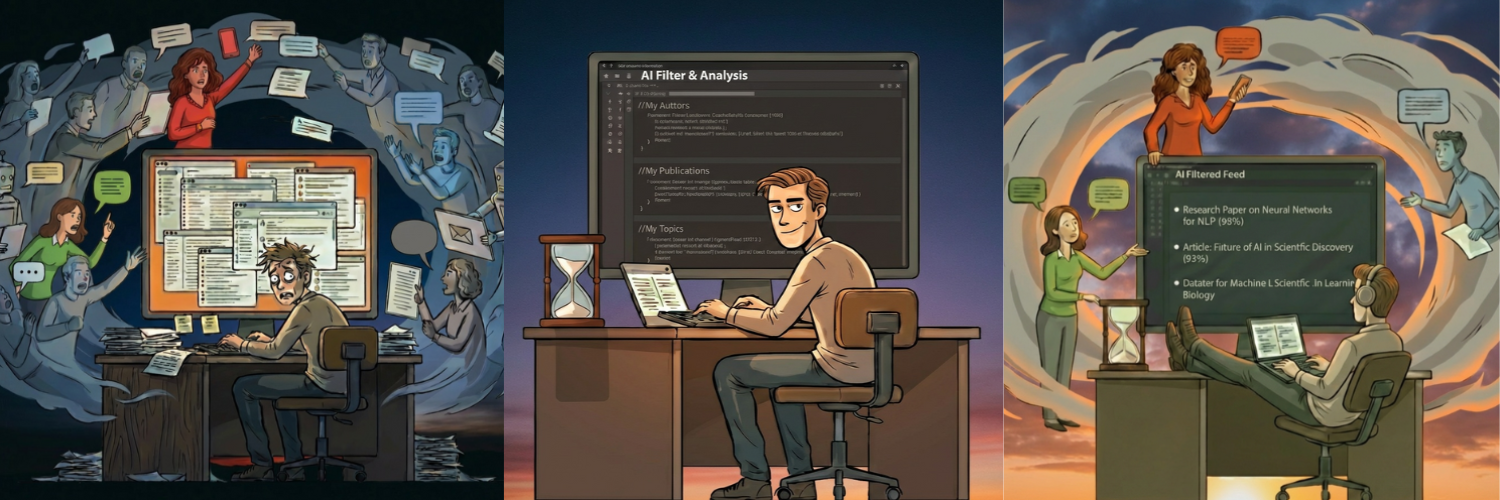
Using AI to Discipline Attention 02/17/2026 Last week, I admitted I’m part of the problem. Despite advocating restraint, I’ve felt the pull to post more, feed the algorithm, and add to the noise. We’re all drowning in a flood we helped create.
We Are a Part of the Problem 02/10/2026 I’ve just finished a three-part series arguing that wisdom, in our current moment, means constraint-awareness. One of the core practices I advocate is generative restraint: resisting the impulse to add to the noise, valuing thought before speech, and recognizing that not every reaction needs to b...

The Architecture of Language, Part III 02/03/2026 If external constraints can no longer stabilize the linguistic interface, then the stabilizing function must move inward: from the environment to the mind, from architecture to practice, from imposed limits to cultivated awareness. The word for this is wisdom.

The Architecture of Language, Part II 01/27/2026 Our linguistic infrastructure is experiencing serviceability failure, fracturing shared reality, overwhelming attention, creating authenticity paradoxes, and widening the gap between knowledge and wisdom, with LLMs accelerating the crisis by eliminating the last friction in language production.
The Architecture of Language, Part I 01/19/2026 Language functions as civilization's operating system, stabilized for millennia by four external constraints: throughput; bottlenecks; locality; and friction, all of which have been systematically dismantled by digital technology.
Mastery of Life 01/12/2026 A daily reflection practice and web app for discovering what actually matters in your life, building the muscle to notice, reflect, and adjust through constrained, minimal check-ins.
The Attention Economy is Eating Democracy 01/07/2026 Algorithmic attention capture undermines democracy by hijacking executive function and fragmenting shared reality, requiring new architectures that support collective deliberation rather than engagement-driven fragmentation.
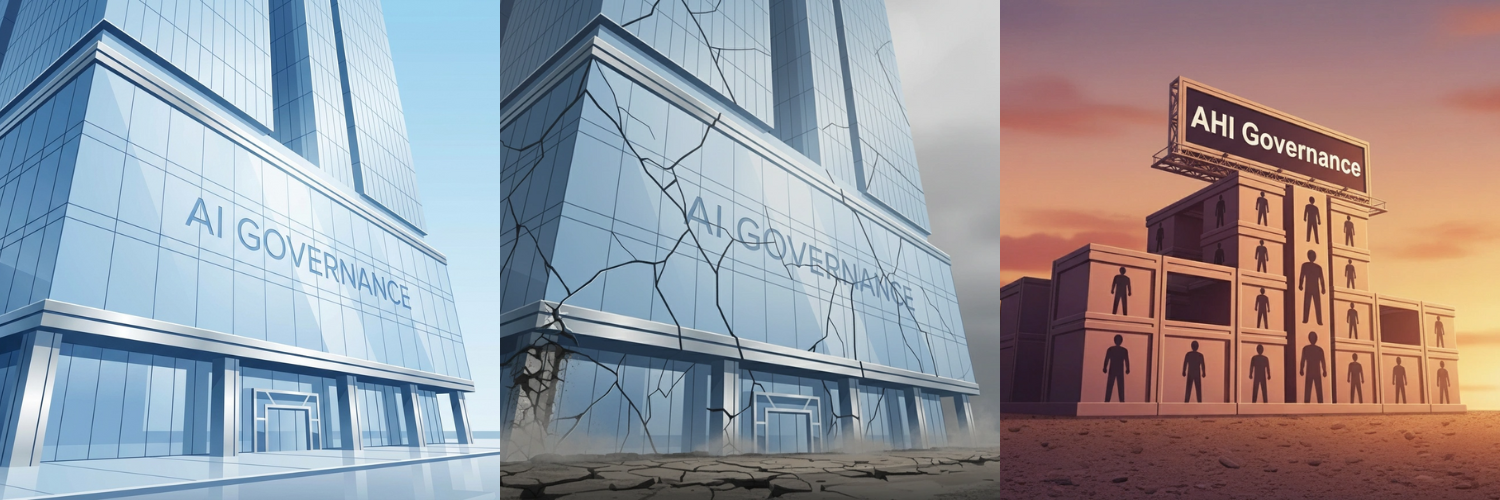
The Intelligence Trap 01/05/2026 Misdefining AI as “intelligent” leads to governance failures; we should instead build Augmented Human Intelligence systems designed for human partnership rather than autonomy."
From AI Architecture to Life Architecture: A Framework for Living Deliberately 12/29/2025 The author applies AI’s modular architecture to personal life, proposing a framework for deliberately allocating attention across seven life domains, turning living into a practice of conscious orchestration rather than reactive survival."
Brain-Computer Interfaces 12/22/2025 BCIs could enable real-time cognitive support by detecting biased thinking as it occurs, though current technology remains limited to medical applications and is far from consumer-ready cognitive augmentation.
From Wonder to Wisdom 12/15/2025 True progress in AI requires moving from seductive, linear projections of scale to an iterative development chain built on modular architecture, feedback loops, and human-machine partnership, where wisdom emerges from correction and co-evolution, not from computation alone.
The Human Attention Crisis 12/11/2025 Humanity now produces more language than we can process, destabilizing our shared reality; to navigate this, we must build Augmented Human Intelligence systems that strengthen human attention and judgment rather than replace them with centralized oracles.
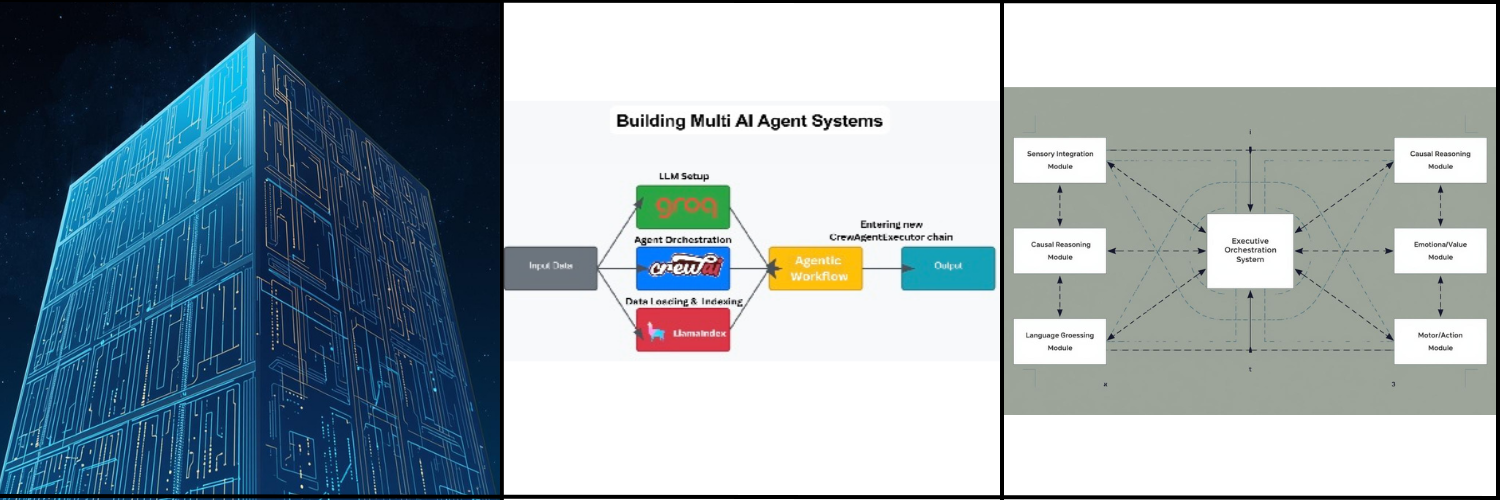
Beyond Scale: Architecture as the Real Path to Intelligence 12/08/2025 The pursuit of AI through scaling alone has reached diminishing returns; true intelligence requires a modular architecture inspired by evolution, specialized systems orchestrated by an executive function for adaptability, efficiency, and human partnership, not autonomy.
Attention Is All We Have 12/02/2025 Attention is the core constraint on all intelligence; we need systems, both AI and personal, that help us focus on what matters rather than distract us from it.
Why I’m Exploring the Architecture of Attention 11/18/2025 Intelligence stems from the attention architecture, not compute scale; the future of AI should be modular systems that augment human judgment, not monolithic models that replace it.
The 30-Million-Fold Efficiency Gap: Why Evolution, Not Computation, is the Key to AGI 11/06/2025 Evolution’s energy-efficient brain architecture shows that scaling alone won’t lead to AGI; we must learn from biology’s modular, embodied, and causal design
From Here On, I Am Focusing on What Matters 11/03/2025 After a career shift, the author develops a framework that links evolutionary biology, AI, and human consciousness, arguing that principles such as attention and modularity can lead to better technology and more meaningful lives.