
The Wave That Bypasses the System
Three Days is How Long a Human can Survive without Water
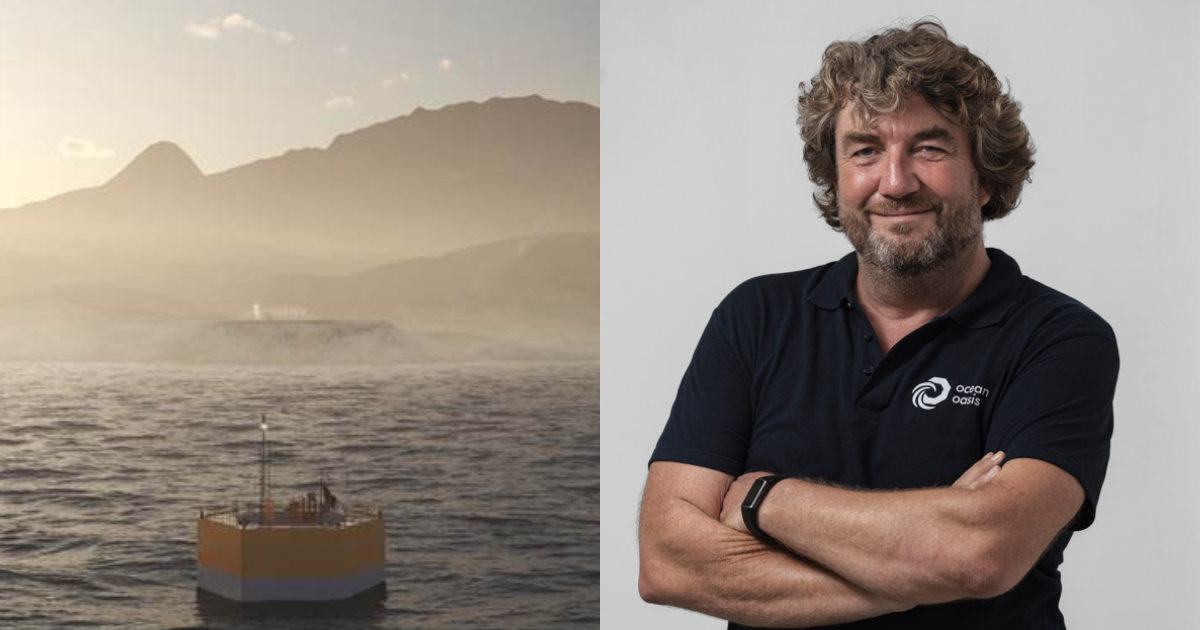
I want to tell you about a friend of mine. Thomas Johannessen and I met at Imperial College London in 1990. We were students together, young civil engineers convinced we could figure out how complex systems worked. To be clear, Thomas is an engineer’s engineer; he annoyed many of us with his desire to work from first principles rather than learning the equations and plugging in the numbers. As is the way, we went our separate ways after graduation, different careers, different countries, but stayed in touch spasmodically, and established a timeless bond. A couple of weeks ago, thanks to another of those timeless bonds (Angelos), we and another of these timeless contacts (Alessandro) sat together in Lisbon, ate well, and talked about the world the way you do when you’ve known each other for more than thirty years. All of us have been successful in our own rights, but this post is about Thomas. Thomas is Norwegian. He is also, quietly (but trust me, he is not quiet in person), one of the people working on one of the most important engineering problems of our time.
The Problem Is Bigger Than You Think
Water scarcity is not a future threat. It is here now. Remember the Survival Rule of Threes: death is the likely result of three minutes without air, three hours without shelter (in extreme conditions), three days without water, and three weeks without food. Four billion people, more than half the world’s population, face critical water shortages for at least one month every year. By 2030, global demand for freshwater will exceed supply by 40%. Sixteen of the world’s twenty-five most water-stressed countries are in the Middle East and North Africa. In the Gulf states, desalination plants are not an amenity. They are the difference between a functioning society and collapse. Kuwait gets 90% of its drinking water from desalination. Oman 86%. Saudi Arabia 70%.
The world is going to need a lot more desalinated water. The only question is how we produce it.
The Problem With How We Do It Now
Conventional desalination works by forcing seawater through a membrane at very high pressure, a process called reverse osmosis (see Thomas for the schematics and math). It is effective. It is also energy-hungry, fossil-fuel-dependent, and generates enormous quantities of chemically-laden brine that damages marine ecosystems.
The industry is growing at nearly 10% per year. If that growth runs on fossil fuels, as most of it currently does, we will be trading a water crisis for an accelerated climate crisis. Solar and wind can help. But they introduce an inefficiency: you generate electricity first, then use that electricity to create hydraulic pressure. Every conversion step loses energy.
Thomas looked at that problem and asked a different question. What if you skipped the electricity altogether?
What Ocean Oasis Has Built
Thomas is the CTO, co-founder, and inventor of the technology behind Ocean Oasis, an Oslo-based cleantech company. The concept is elegant in the way that the best engineering always is; it is, in my language, architecturally brilliant (a bit like Thomas… begrudgingly).
Wave-powered desalination buoys float offshore. As they move with the waves, that kinetic energy directly drives the high-pressure RO desalination process; no grid connection, no fuel, no emissions, no chemicals on board. The brine is discharged offshore, where deeper water and stronger currents diffuse it far more effectively than coastal discharge from land-based plants.
The offshore location solves multiple problems at once: no coastal land footprint and better brine management. And waves, unlike solar panels, work at night.
Thomas puts it this way: wave power is a concentrated form of energy. It is abundant along many coastlines where water scarcity is most severe. And direct mechanical application for desalination bypasses the losses associated with electricity generation, which other wave energy projects have historically struggled with.
A pilot buoy called Gaia was deployed off Las Palmas in 2022. It worked.
Where Things Stand
In 2024, Ocean Oasis secured a €6 million grant from the European Union for the DESALIFE project, deploying a fleet of four buoys off the coast of Gran Canaria to supply fresh water to 15,000 people. The first pre-commercial buoys are targeted to produce freshwater by mid-2026.
This is not a concept. This is not a deck. This is a validated, permitted, funded technology at the threshold of commercial deployment. But the EU grant requires matched funding. Thomas and the Ocean Oasis team are currently in an investment push to secure the capital needed to turn this demonstration into a commercial platform.
The economics are site-dependent by design. The price that can be charged for the water produced varies with local wave conditions and legislation, but it ranges from a little below 1 to 3 Euros per cubic meter delivered. That variability is not a weakness; it is what makes the modular, deployable-anywhere architecture genuinely valuable. The system goes where the need and the economics align.
It is worth noting that this is exactly the kind of technology our investment infrastructure struggles to fund. The EU grant is meaningful validation, but the requirement for matched private capital to move from demonstration to deployment reveals a systemic gap: we have no coherent mechanism for commercializing proven climate adaptation technology at the speed the crisis demands. The engineering works. The financing architecture hasn’t kept up.
Why This Matters Beyond Gran Canaria
The islands of the world, the Canaries, Cape Verde, the Philippines, and the Pacific, are exactly the communities that need this most and are hardest to reach with conventional infrastructure. Wave energy is reliably available along the coastlines where water stress is greatest. The system is modular. Scale it up by adding buoys, not by building new plants.
The water crisis is an infrastructure problem. Infrastructure problems get solved by people who are willing to rethink the architecture from the ground up, not just optimise what already exists.
Thomas has been working on that rethink for years. The engineering is proven. The regulatory path is clear. The need is urgent and growing.
The Pattern
What Thomas has built is more than a new desalination system. It is an example of what happens when you step back and rethink a problem’s architecture.
Most solutions add layers. Generate electricity. Convert it to pressure. Push water through a membrane. Each step works. Each step also introduces loss. The system becomes more complex, more expensive, and more fragile at every stage.
Thomas removed a layer. Wave energy becomes pressure directly. Same goal. Different architecture. Dramatically different outcome.
I spend a great deal of my time thinking about artificial intelligence. One pattern I see repeatedly is the same tendency, to add scale rather than rethink structure. More parameters. More data. More compute. Each addition works, after a fashion. Each addition also introduces cost, fragility, and diminishing returns.
The most important breakthroughs, in engineering and in life, rarely come from adding more. They come from redesigning the system.
Thomas has been doing this his entire career. The rest of us were learning the equations and plugging in numbers. He was asking whether the equations were the right ones to begin with.
Why This Matters to Me
I believe that AI is the most consequential technology humans have ever created. I also believe it should augment human capability, not replace it. But augmenting human capability requires humans, healthy, hydrated, alive. The biological layer is not optional. It is the foundation on which everything else runs.
Water is not a background condition. It is the base infrastructure. And right now, that infrastructure is failing at scale.
The Ask
Ocean Oasis is at the point where engineering proof needs to become deployed infrastructure. That requires capital.
If you invest in climate, water, or energy systems, or know someone who does, this is worth serious attention.
Thomas’s contact information is as follows: Thomas B. Johannessen, PHD Co-CEO Technology Ocean Oasis AS Email: thomas@oceanoasis.co Mobile: +47 907 43 263
I do not have a financial stake in Ocean Oasis. I have a thirty-three-year stake in Thomas. That is a better reference than any pitch deck.
Architecture & Attention explores how systems are designed, how attention shapes outcomes, and why the architecture of things matters more than we think. If this resonated with you, share it with someone who should read it. My next post will be published on April 7th.
Originally published on Substack.